In Joseon Korea, ornament was rarely only ornament. A flower, a creature or even a stone in a dwikkoji was chosen for what it wished upon the wearer.
Korean decorative art calls these auspicious designs gilsang-mun (길상문), "patterns of good fortune". Many are shared with China and the wider East Asian world. Korea gave them its own emphasis, and some, such as the grouping of the ten symbols of longevity, are particularly Korean. Here is what the most common dwikkoji motifs meant.
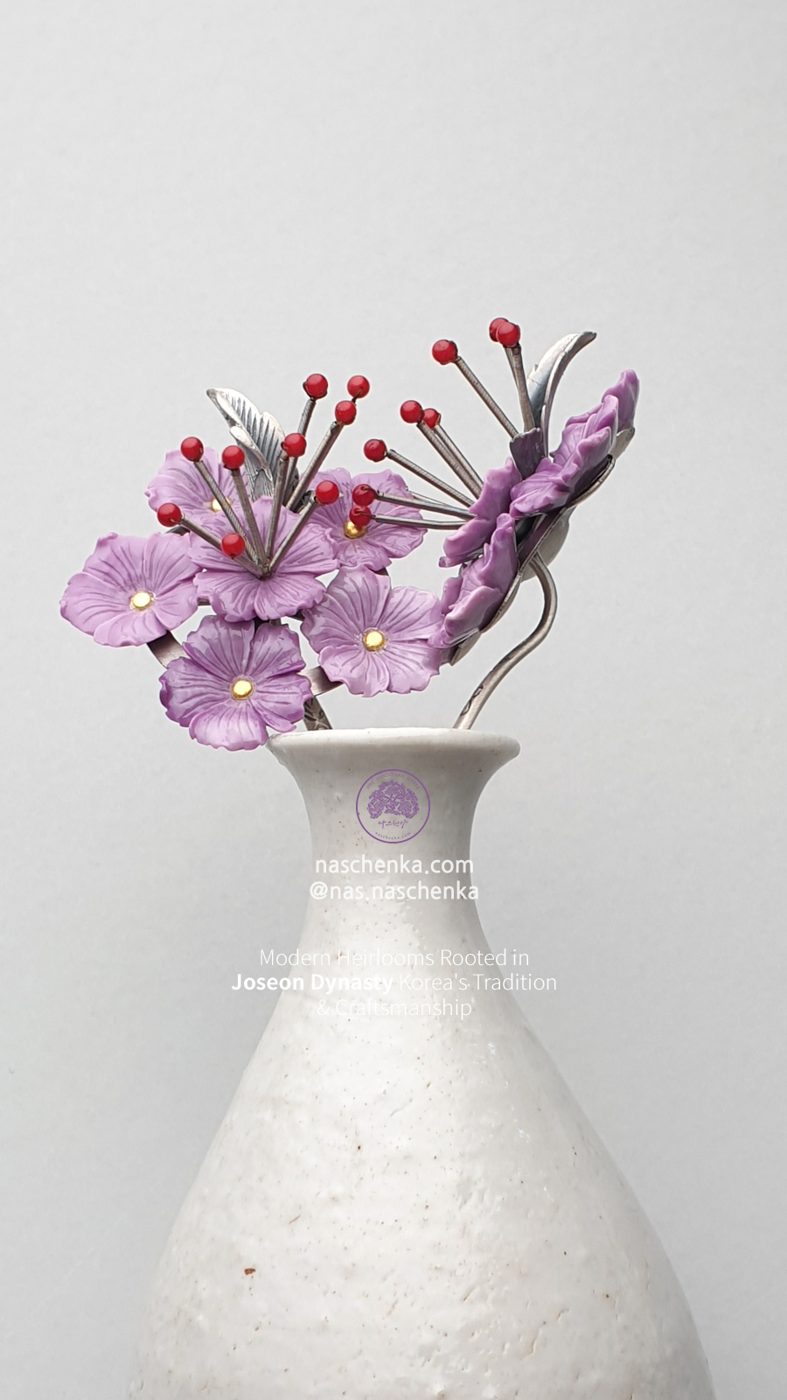
Flowers
- Chrysanthemum 국화
- It flowers late, after the first frosts, so it stands for constancy, integrity and long life. It is the flower of the gwapan, the most common dwikkoji.
- Plum blossom 매화
- It is the first flower of the year, blooming through snow. It stands for resilience and purity. Paired with bamboo, it was worn as a symbol of a woman's integrity.
- Lotus 연꽃
- It rises clean from muddy water: integrity and spiritual purity. Because flower and seed pod grow together, the lotus was also a wish for children soon after marriage. The closed bud is the yeonbong.
- Peony 모란
- The "king of flowers", standing for wealth, honour and prosperity. It is often seen in openwork gold and on bridal pieces.
- Bellflower 도라지꽃
- A wild flower of the Korean hills, loved in folk song. It is a gentle, distinctly Korean motif.
Creatures
- Butterfly 나비
- Joy, beauty and a happy couple, especially when shown with a flower (hwajeop). It is the classic bridal motif.
- Bat 박쥐
- In Chinese characters, "bat" (蝠) and "fortune" (福) are pronounced the same, so the bat is a sign of blessing. Five bats together stand for the five blessings.
- Phoenix 봉황
- Virtue, peace and high rank. It was the emblem of the queen.
- Mandarin ducks 원앙
- They always swim in pairs, so they mean faithful married love.
Fruit and signs
- Heavenly peach 천도
- The fruit of the immortals: long life. Its full, rounded shape was also associated with fertility.
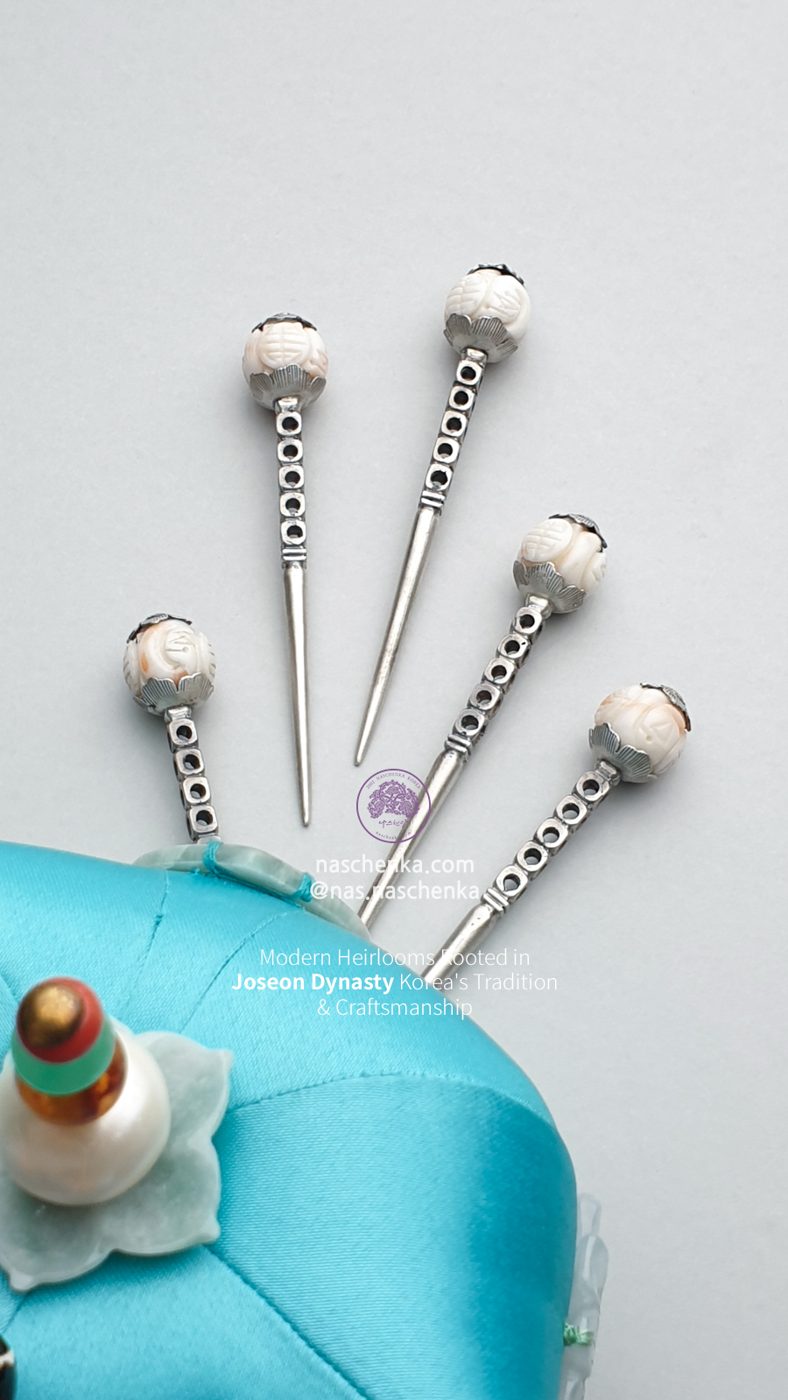
- Longevity character 수(壽)
- A stylised character for long life, often carved into round beads or engraved on the end of a pin.
- Bamboo 대나무
- Straight, hollow and evergreen. It stands for integrity and for remaining unchanged in hardship.
The meaning of stones
The materials carried meaning too. Coral, a living thing from the sea, was a colour of vitality and of warding off misfortune. Jade was the stone of virtue, so treasured that Koreans use "jade" in everyday speech for anything precious. Amber was formed from pine resin over a very long time. Resin is how a pine heals its own wounds, so amber, especially the honey-coloured milhwa, came to symbolise healing and long life. Its soft, unshowy colour was also thought fitting for times of mourning.
See more on each stone in Materials of the dwikkoji.
Reading a dwikkoji
When you look at a traditional dwikkoji, try to "read" it. A butterfly over a chrysanthemum in coral and jadeite says: a happy marriage, a long life, health and virtue. A silver ear pick with a plum blossom says: a practical woman of integrity. Korean ornaments were small, but they spoke clearly.
References
- Encyclopedia of Korean Culture — 뒤꽂이 (Dwikkoji)
- Sookmyung Women's University Museum — Korean Symbols of Wishes (Google Arts & Culture)
- Sookmyung Women's University Museum — Chilbo hairpin with plum and bamboo (Google Arts & Culture)
- Academy of Korean Studies, Korean Costume Dictionary — 밀화 (Milhwa amber)
- Traditional patterns of Korea