Search for "Korean hairpin" and you will find thousands of results, from a few dollars to many hundreds. They can look alike in a photograph. In the hand, they are very different things.
This guide does not name sellers. It explains what to look for, so that you can judge any piece yourself.
Tradition can be imitated in fabric. It cannot be imitated in metal.
1. The metal
- Look for a 925 mark. Sterling silver is 92.5% pure silver. A reputable maker marks it or states it clearly.
- Feel the weight. Silver is dense and cool. Brass, zinc alloy and aluminium feel light and quickly warm in the hand.
- Watch how it ages. Silver tarnishes grey to black and polishes back to white. Brass and copper alloys turn green or brown, and plating wears through to a yellow or grey base.
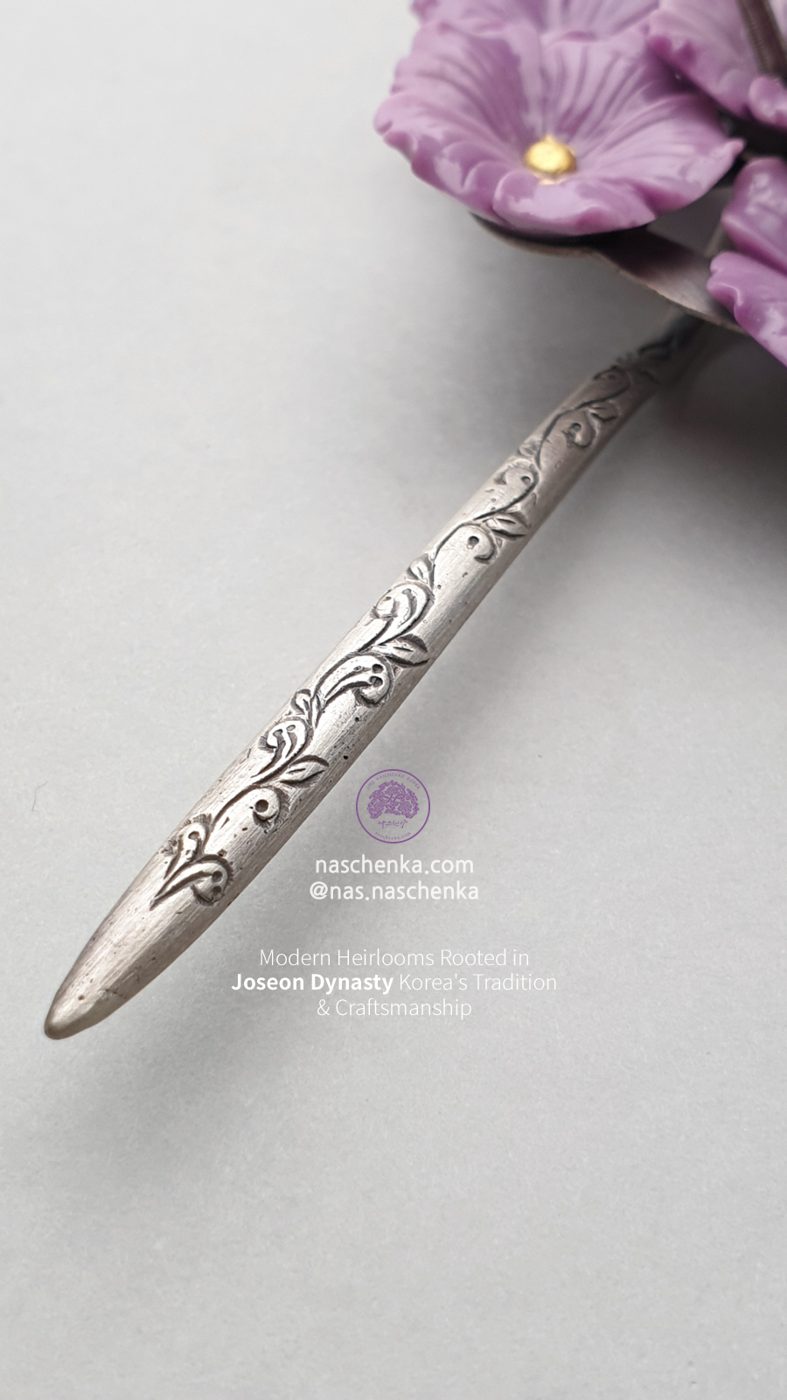
- Check the point. A good dwikkoji has a smooth, rounded point that slides into hair without catching. Rough or sharp cut ends signal mass production.
2. The handwork
- Engraving: hand engraving has slight variations in depth and a lively line. Cast or stamped patterns are shallow, soft-edged and identical from piece to piece.
- Joins: look where the head meets the stem. Hand soldering is clean and strong. Glue, visible seams or a stone simply pressed into a cup are signs of assembly from parts.
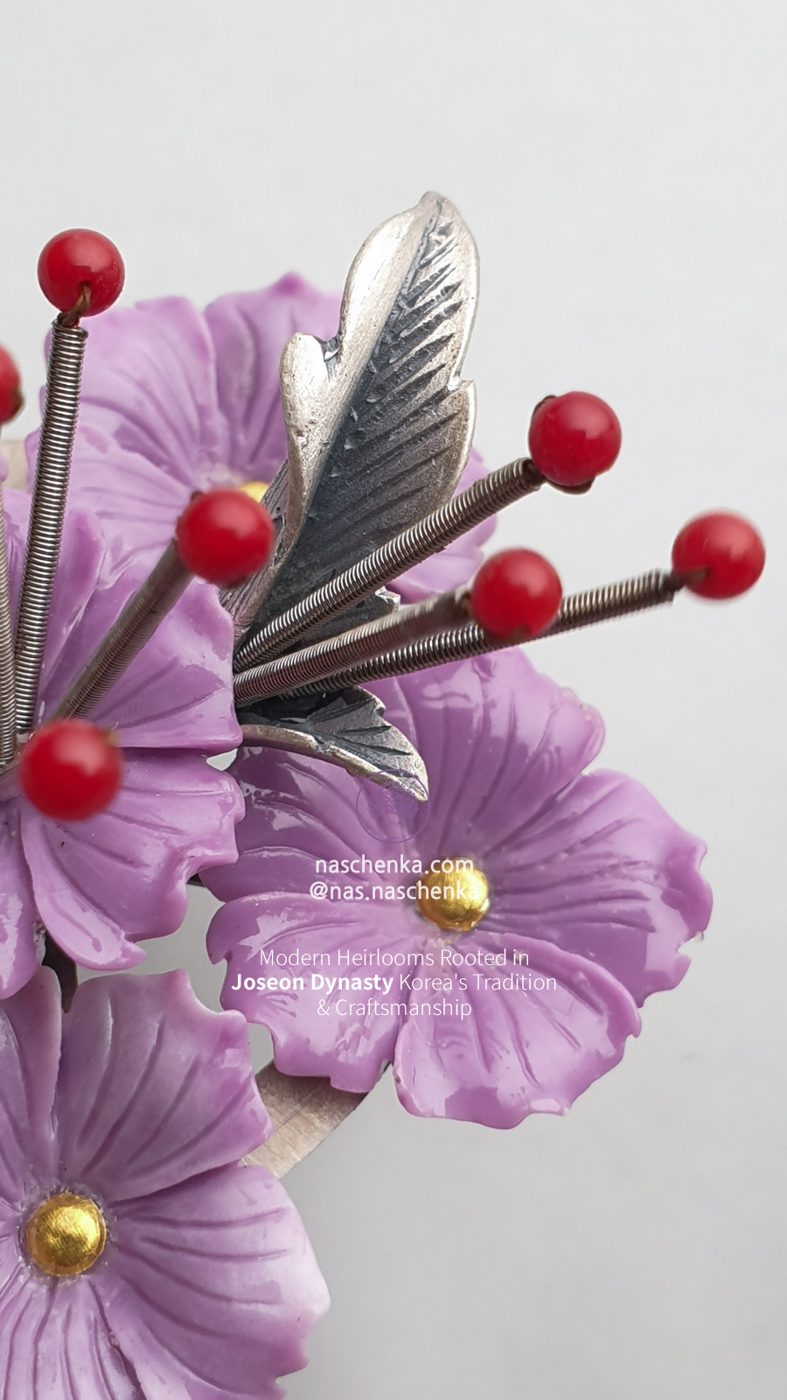
- Moving parts: trembling springs, dangling flowers and pearl tips should be individually wired and finished, not glued.
- Variation: no two handmade pieces are exactly alike. If every photo looks identical, the piece is probably mass-produced.
3. The stones
- Coral: natural coral shows fine growth lines and small pits. Dyed bone, glass or plastic "coral" is perfectly even in colour.
- Amber: real amber is very light, warm and often has tiny natural inclusions. In salt water it floats, while most plastics and glass sink.
- Jadeite: it is cold, dense and heavy for its size. Ask whether it is treated. An honest seller will tell you. "Jade" alone can mean many different stones.
- Pearl: real pearl feels slightly gritty against the teeth. Plastic and glass pearls feel smooth.
4. Questions to ask any seller
- What metal is this, exactly? Is it solid silver or plated base metal?
- What are the stones? Are any treated, dyed or synthetic?
- Who made it, and where?
- Is it handmade or cast? Assembled from bought parts, or made from start to finish?
- Can it be repaired, and by whom?
A maker who works with real materials will answer all five without hesitation.
5. Price
Silver, natural stone and hours of handwork have a real cost. A "silver" dwikkoji with natural coral and jade selling for the price of a coffee is not what it claims to be. That does not make low-cost hair sticks bad. They are fine as costume or fashion accessories. But they are a different thing from a traditional ornament made to be kept.
How NASCHENKA works
- Every piece is made in 925 sterling silver, finished in white or gold plating.
- Stones are natural, and treatments are disclosed. Treated jadeite is labelled "natural jadeite, treated".
- Pieces are designed by Kim Seong-eun and made by hand in Seoul with a circle of twenty artisans.
- Prices are published openly on naschenka.com.