The traditional dwikkoji is a meeting of metal and stone. The metal gives it a body and a point. The stone gives it colour and meaning.
Korean sources list the classic dwikkoji materials as silver and baekdong (white bronze), with coral, jadeite, enamel and pearl. Joseon Korea divided precious materials into three groups: stones such as jadeite, white jade and agate; bopae, organic gems from living things, such as coral, pearl and amber; and metals.
The metals
Silver 은
Silver was the noble everyday metal of the Joseon dwikkoji. It is strong enough to hold a fine point, soft enough to engrave, and it takes on a deep, soft grey with age. Gold was restricted by sumptuary laws. Gold-plated silver gave the warmth of gold for ceremonial pieces.
Baekdong — white bronze 백동
A copper-nickel alloy with a silvery colour, used for less costly ornaments. Many dwikkoji surviving in museums today are baekdong or other copper alloys.
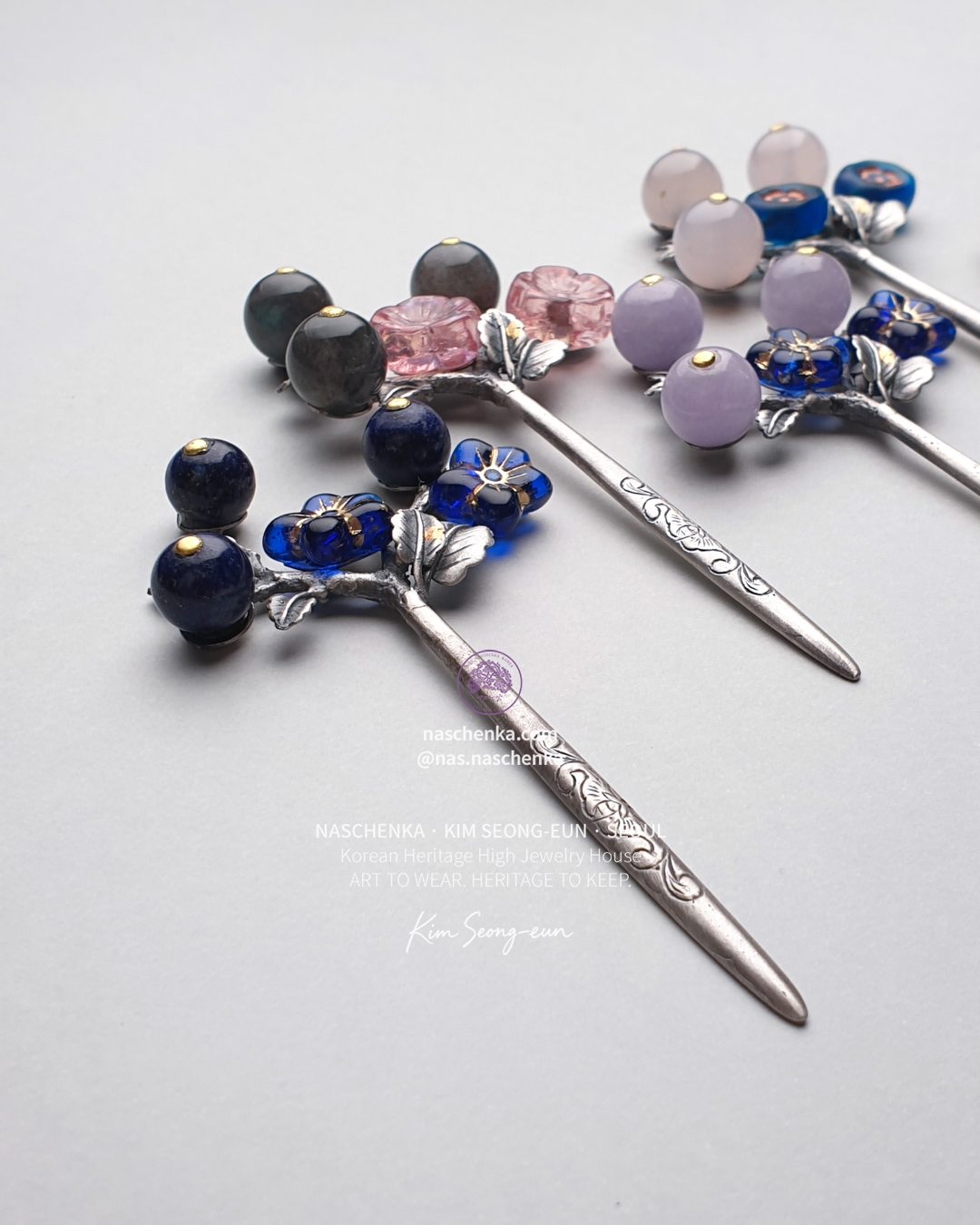
NASCHENKA works only in 925 sterling silver, finished in natural white or in gold plating. We do not use brass or base-metal alloys for any piece.
The stones
Jadeite 비취
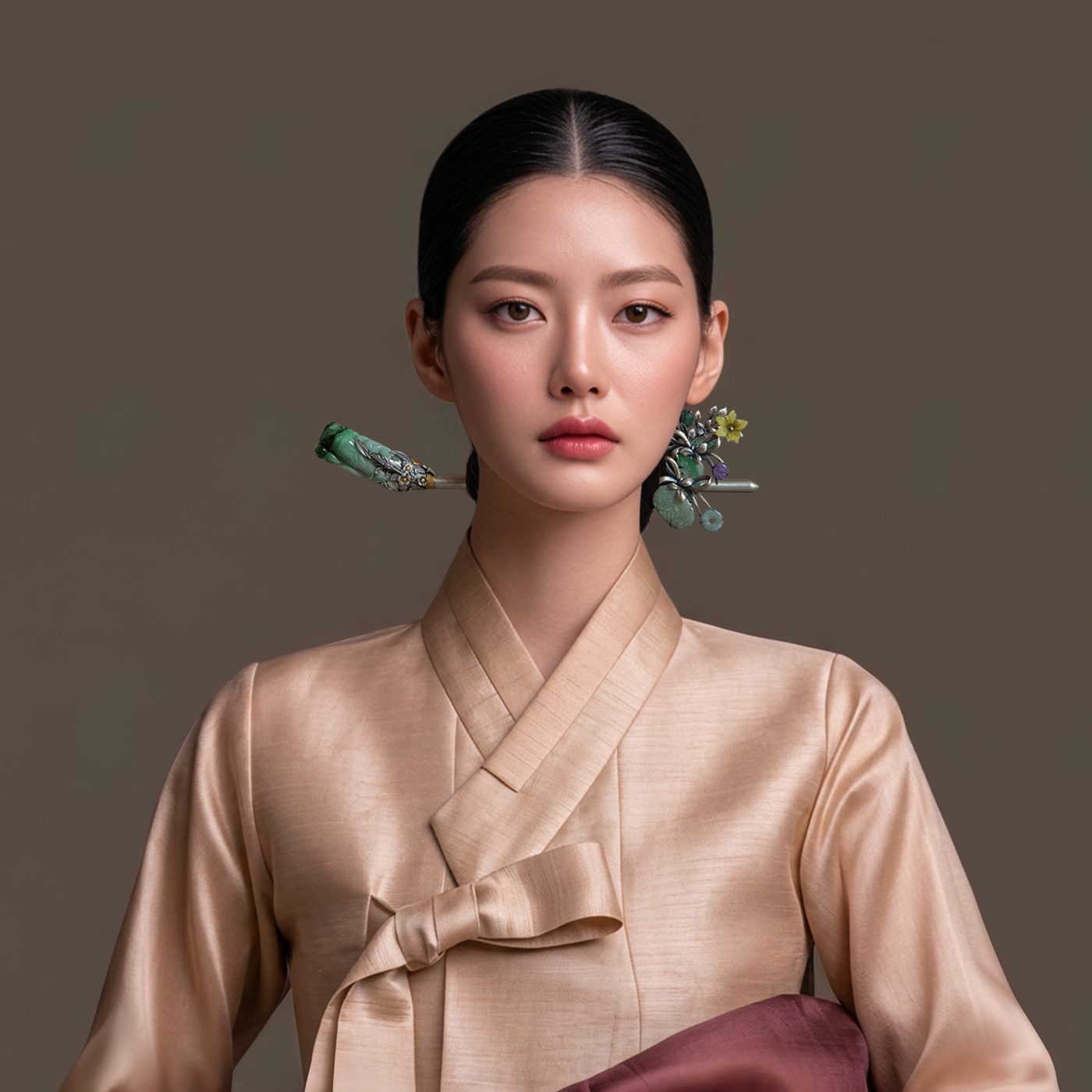
Green jadeite was considered the most precious of all stones in Joseon Korea, prized for its colour and its toughness. In the royal household, white jade, jadeite and coral hairpins were worn especially in summer, for their cool, clear look. Lavender jadeite gives a softer, more modern colour.
A word on honesty: most jadeite on today's market is treated to improve its colour or clarity. NASCHENKA labels such stones plainly as natural jadeite, treated. Any seller should be able to tell you whether a jade is treated.
White jade 백옥
Soft, creamy nephrite was carved into flowers and plates for hair ornaments. In Korea it is closely associated with Chuncheon in Gangwon Province, a long-standing source of nephrite.
Other stones
Agate, carnelian, rock crystal, amethyst and lapis lazuli all appear in Korean jewelry. Today's makers add stones such as larimar and peridot, chosen for how their colour reads against dark hair.
The organic gems — bopae 보패
Coral 산호
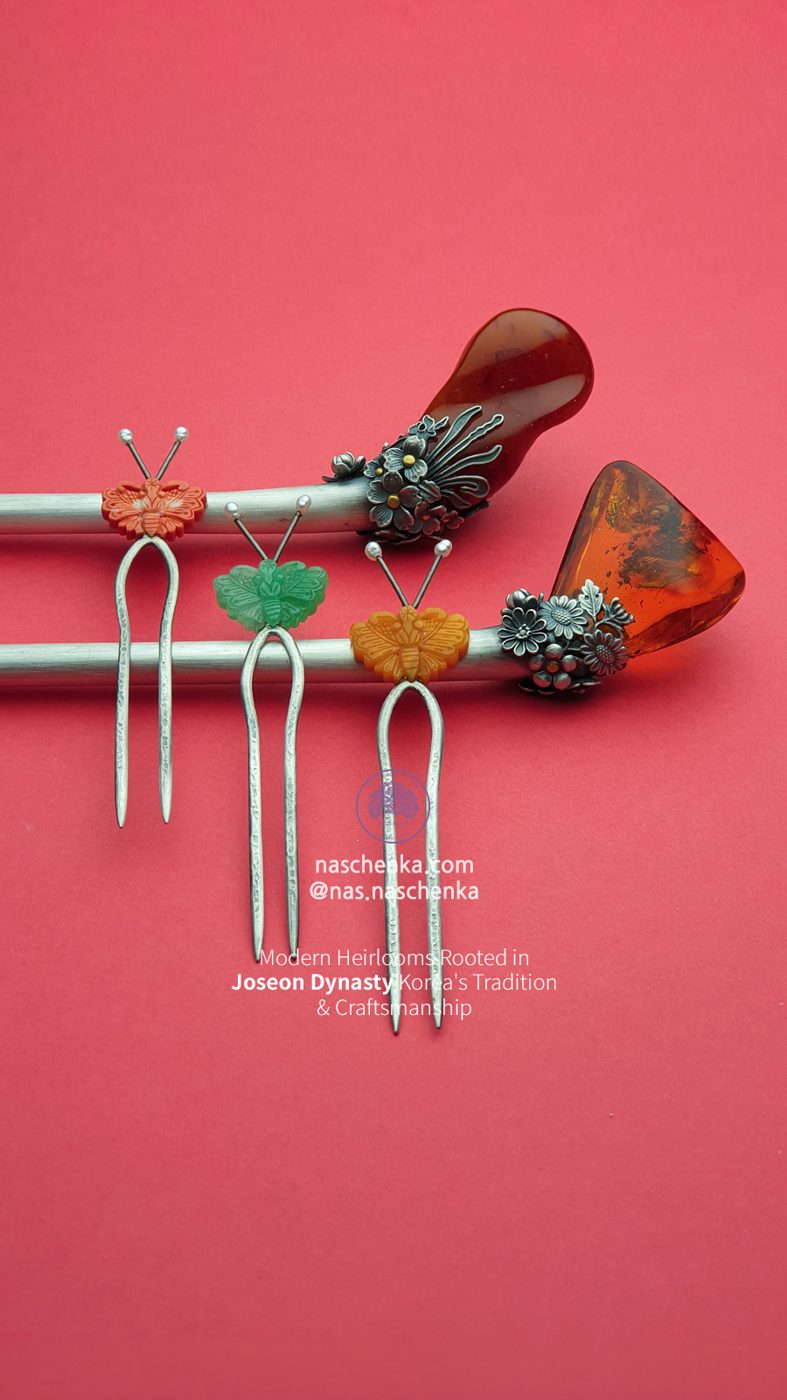
Red coral was the great colour of the dwikkoji: vivid, warm, and linked with vitality and protection. It was used as polished beads, carved flowers and peaches, and natural branches set upright in silver.
Amber: milhwa and geumpa 밀화 · 금파
Korean tradition distinguishes two kinds of amber. Milhwa is opaque, honey-coloured amber. Geumpa is clear golden amber. Amber is fossilised pine resin, and resin is how a pine heals its own wounds. So milhwa came to stand for healing and long life, and its gentle colour made it suitable even in periods of mourning.
Pearl 진주
Pearl was used as small accents: tips, borders, and the centres of flowers.
Conch shell and mother-of-pearl
Pink conch shell and mother-of-pearl were carved into petals for a soft, luminous effect.
Colour from fire: chilbo and paran
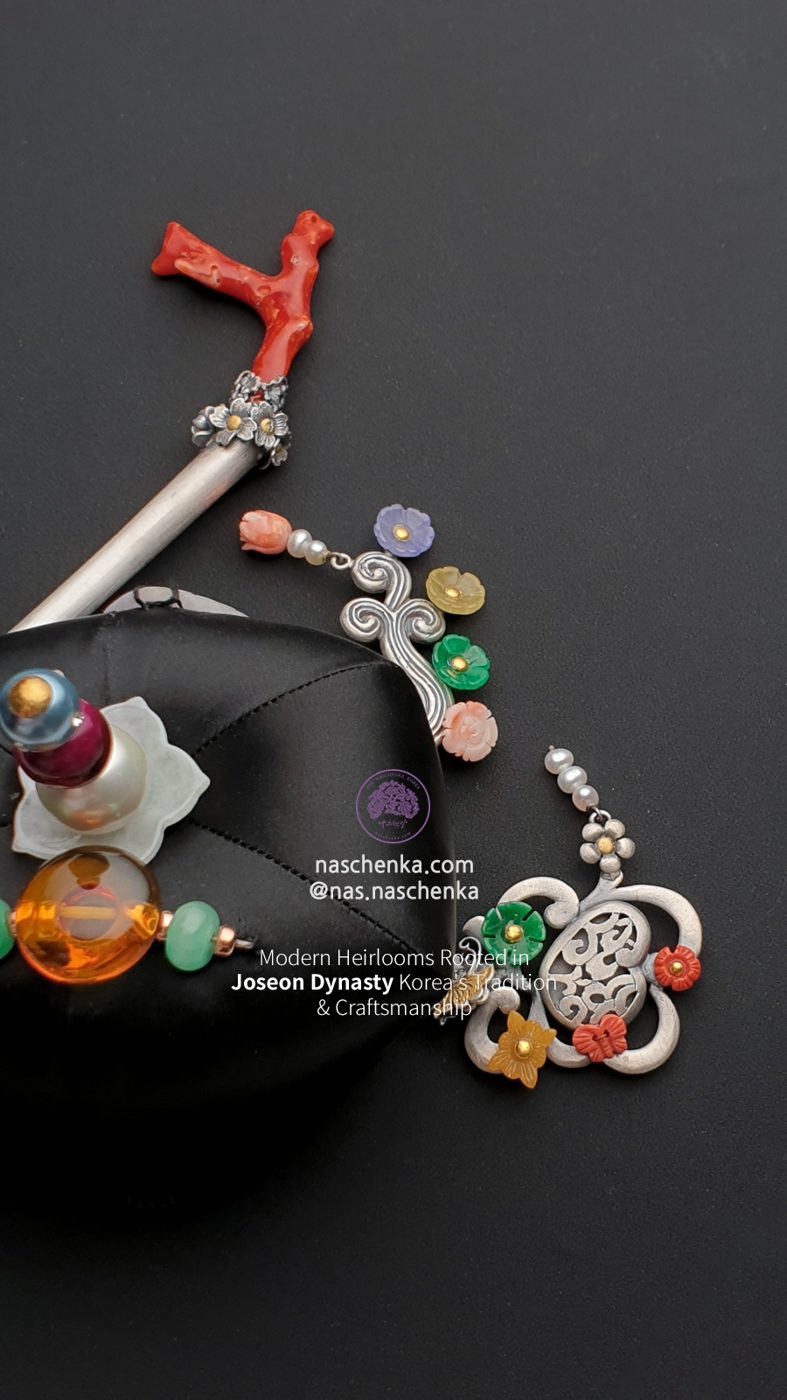
Chilbo (칠보) is cloisonné enamel. Coloured glass is fused into small cells of metal wire. Paran (파란) is a related enamel technique, named for its typical blue-green colour. Both brought the colours of flowers and butterfly wings to Joseon dwikkoji, often with coral set at the heart of a flower.
How to judge a material in the hand
- Silver is cool to the touch, heavier than it looks, and marked 925. It tarnishes grey to black, never green.
- Real coral shows fine growth lines and small natural pits under a loupe. Dyed imitations are evenly coloured and too perfect.
- Real amber is very light and warm, and often has tiny natural inclusions. Plastic feels similar but lacks depth.
- Jadeite is cold, dense and heavy for its size. Glass imitations often show small round bubbles.
For a full checklist, see Authentic or imitation?