A silver dwikkoji with natural stones can last for generations. It asks only for a little care.
After each wear
- Wipe the silver and stones gently with a soft, dry cloth to remove hair oil, hairspray and skin oils.
- Let the piece air for a few minutes before putting it away, especially after a long day.
Cleaning silver
- Use a silver polishing cloth on the metal only, avoiding the stones.
- Do not dip pieces with stones into liquid silver cleaners. They can damage coral, amber, pearl and treated jadeite.
- Do not use toothpaste or baking soda. They scratch the surface and soften engraved detail.
- Slight darkening in the engraved lines is natural and brings out the pattern. Many collectors prefer it.
Caring for the stones
- Coral, pearl and amber
- These are soft, organic gems. Keep them away from perfume, hairspray, acids and heat. Put the ornament in after the hairspray, not before.
- Jadeite and jade
- Hard, but they can chip if dropped on stone floors. Treated jadeite should not be soaked or exposed to strong chemicals.
- Carved and enamelled flowers
- Brush away dust with a soft, dry brush. Never soak.
Storage
- Store each piece separately so stones and points do not scratch one another.
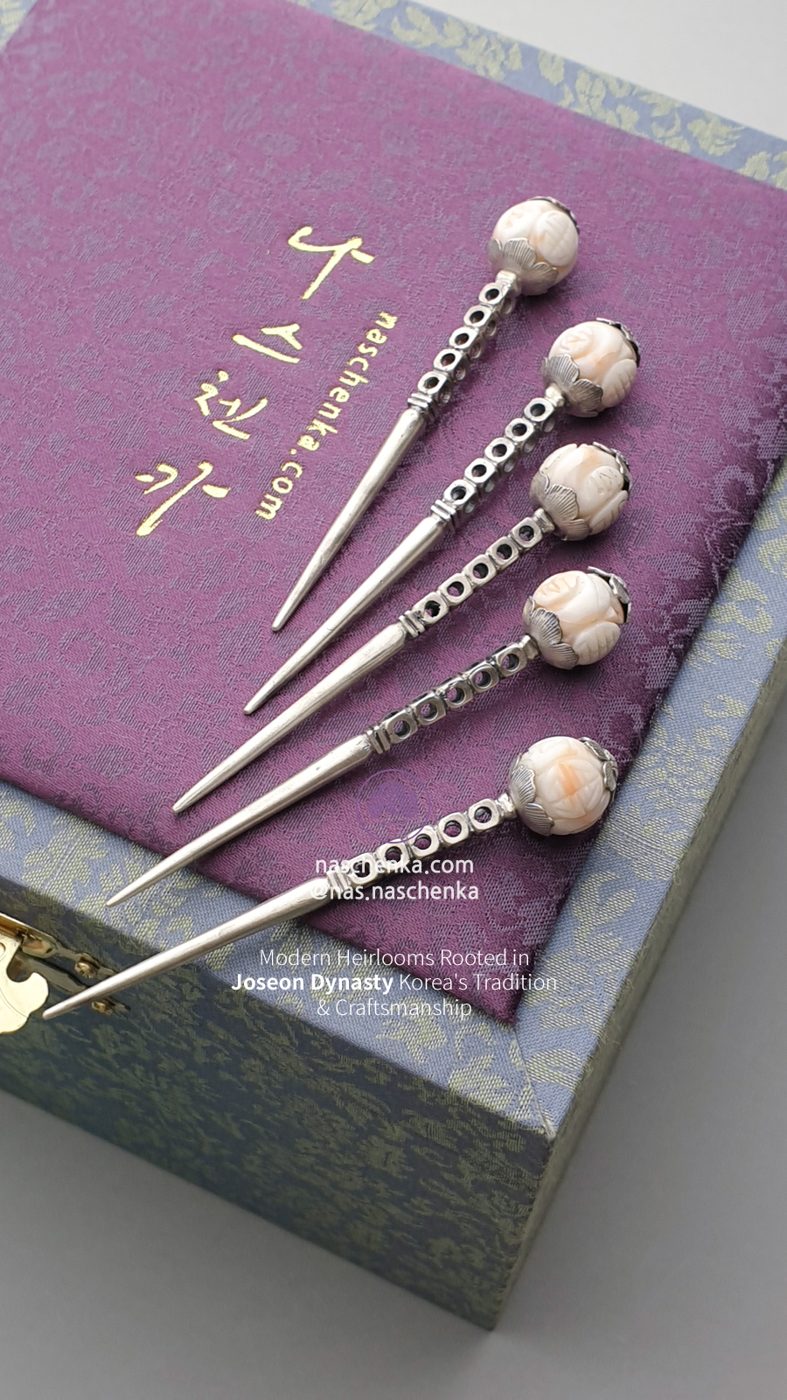
- A closed box with a soft lining, such as the NASCHENKA silk box, protects against dust and slows tarnish.
- Add an anti-tarnish strip in humid climates.
- Keep pieces with trembling springs or dangling parts lying flat, so the springs are not bent.
Repairs
If a stone loosens or a point bends, do not glue it. Glue damages silver and stone and makes proper repair harder. A silversmith can resolder and reset it. NASCHENKA repairs its own pieces at the Seoul workshop.
Passing it on
In Korea, a mother's binyeo and dwikkoji are often passed down to a daughter or daughter-in-law. If your dwikkoji is meant to be an heirloom, keep it in its box with a note of who wore it and when. That story is part of its value.