A dwikkoji goes in last. The hair is set first, the binyeo holds it, and the dwikkoji finishes it.
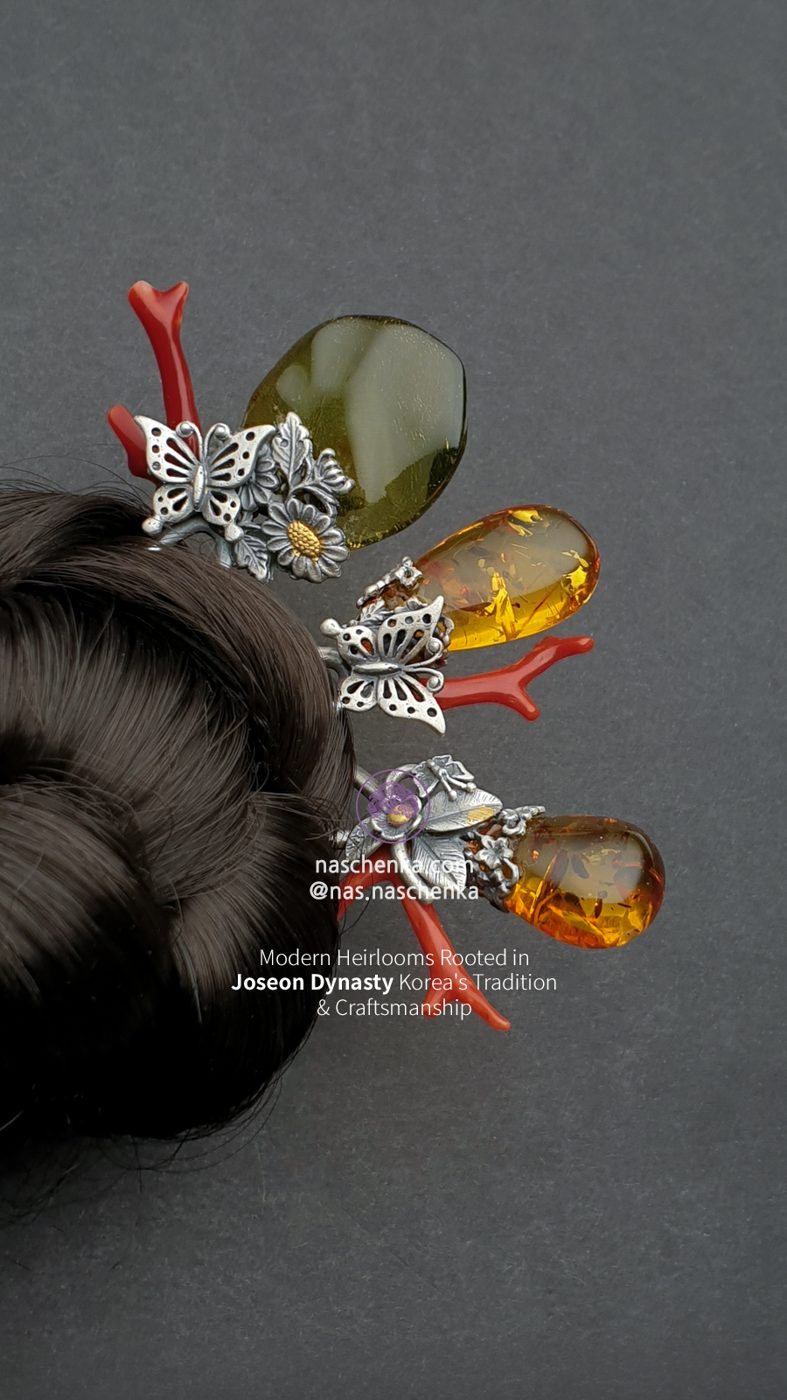
The traditional way: the jjokjin-meori
The classic Korean chignon is made like this.
- Part the hair in a straight line from the centre of the forehead. Traditionally the hair was smoothed with camellia oil.
- Comb the hair back neatly on both sides and gather it at the back of the head.
- Braid it into one long braid and tie the end with a small ribbon, the jjokdaenggi.
- Coil the braid into a flat, round knot at the back of the head.
- Slide the binyeo horizontally through the knot to hold it.
- Add the dwikkoji: insert it into the top or side of the chignon, with the decorated head facing outward.
Where exactly does it go?
- One dwikkoji: place it just above the binyeo, slightly to one side, angled outward.
- A pair: place one on each side of the chignon, symmetrical, like two wings.
- A set of three: the largest in the centre above the binyeo, the others on each side.
- Slide it in at a slight downward angle into the body of the bun, not just the surface, so it does not slip.
- If it has two or three prongs, insert it like a comb, against the direction the hair is wrapped.
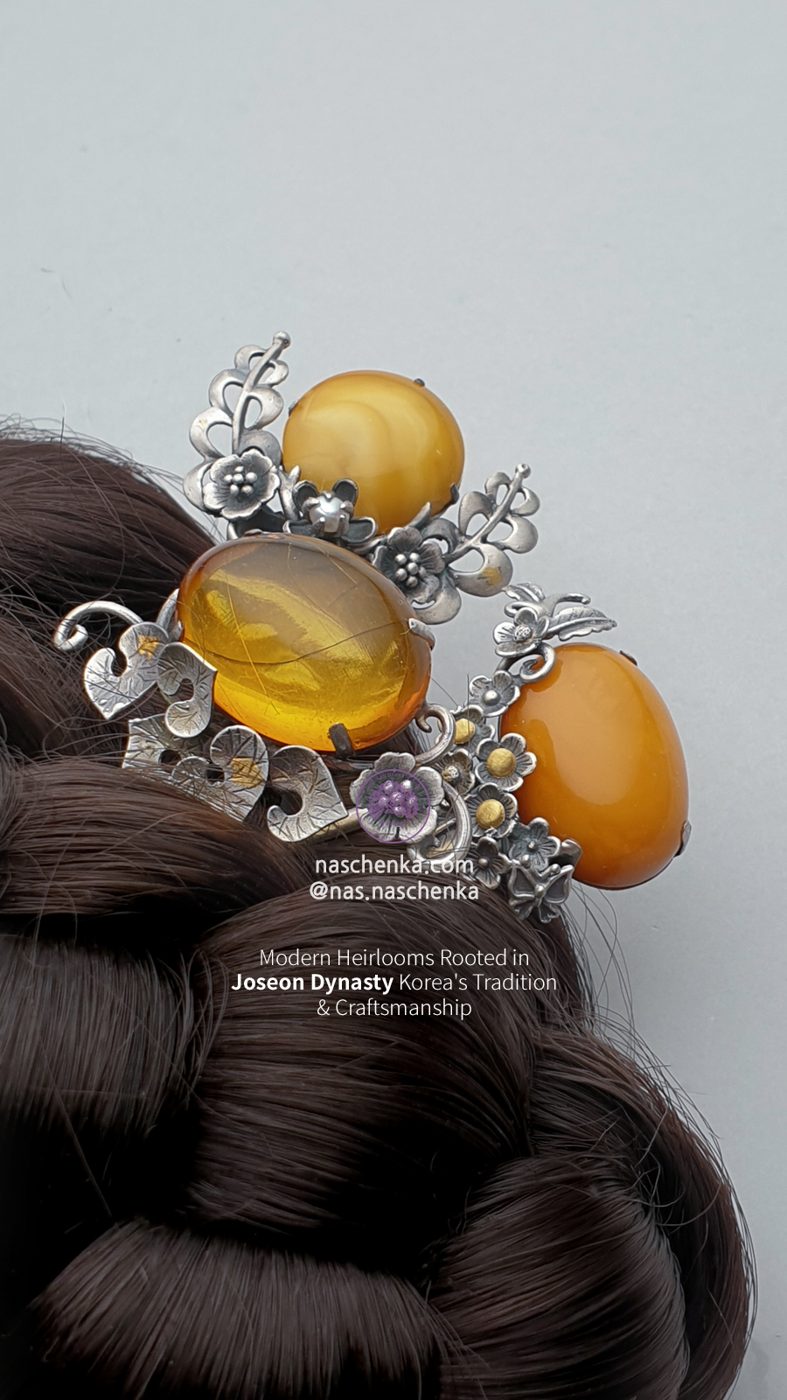
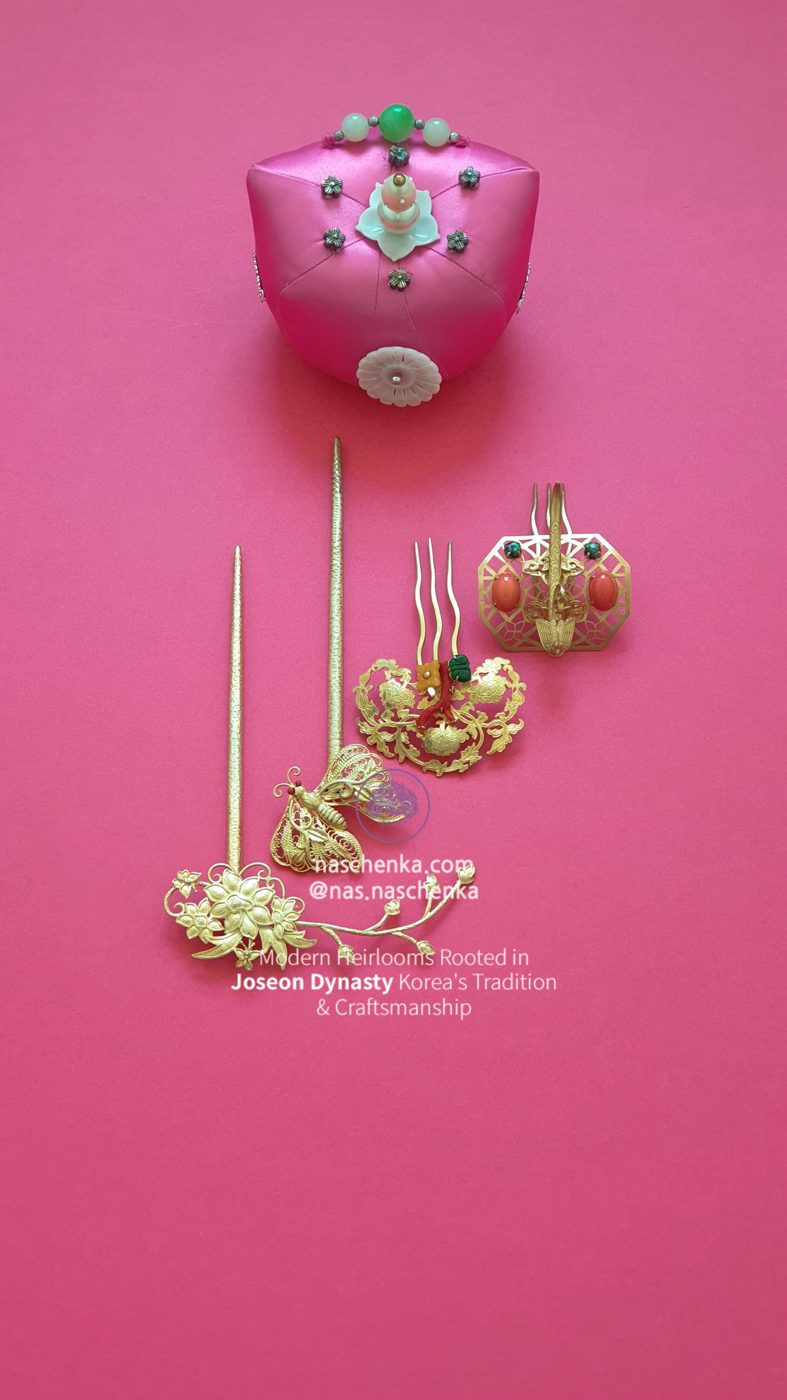
With hanbok
With a hanbok, the dwikkoji is the jewel the guests see from behind. Match its colour to the hanbok, not to the binyeo. Coral and gold read beautifully against pastels and jewel tones. Jadeite and silver suit cool colours and white. Keep the front of the hair simple; the ornament belongs at the back.
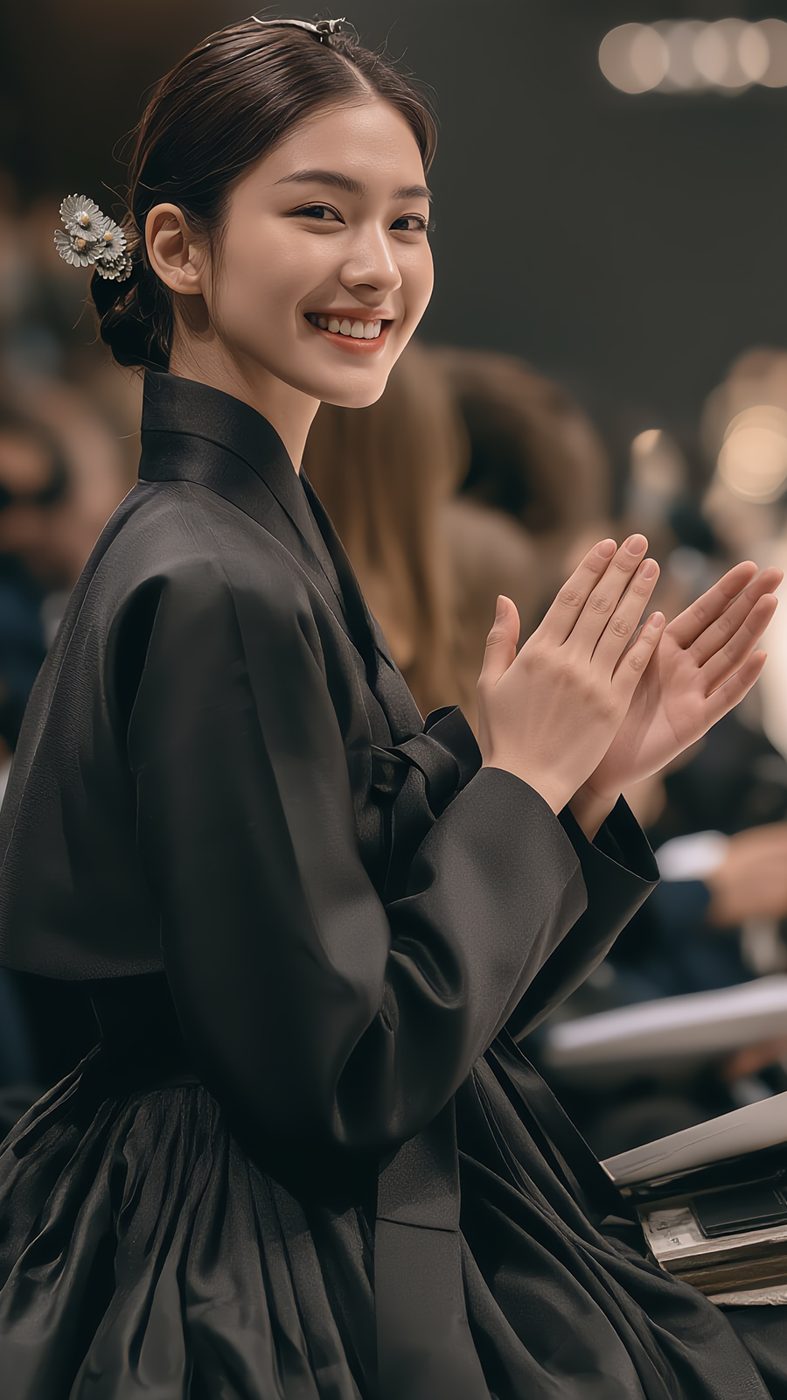
At a Korean wedding
At a traditional or hanbok wedding, the dwikkoji is worn by:
- The bride, with a jokduri or hwagwan crown, a binyeo and often butterfly or flower dwikkoji. Hwajeop (flower and butterfly) is the classic wish for a happy marriage.
- The mothers of the bride and groom, with a low chignon, a silver or gold-plated binyeo and one or two dwikkoji. This is one of the most common occasions for wearing dwikkoji in Korea today.
- Grandmothers and family elders, with a chrysanthemum or peach dwikkoji, both wishes for long life.
With modern hair
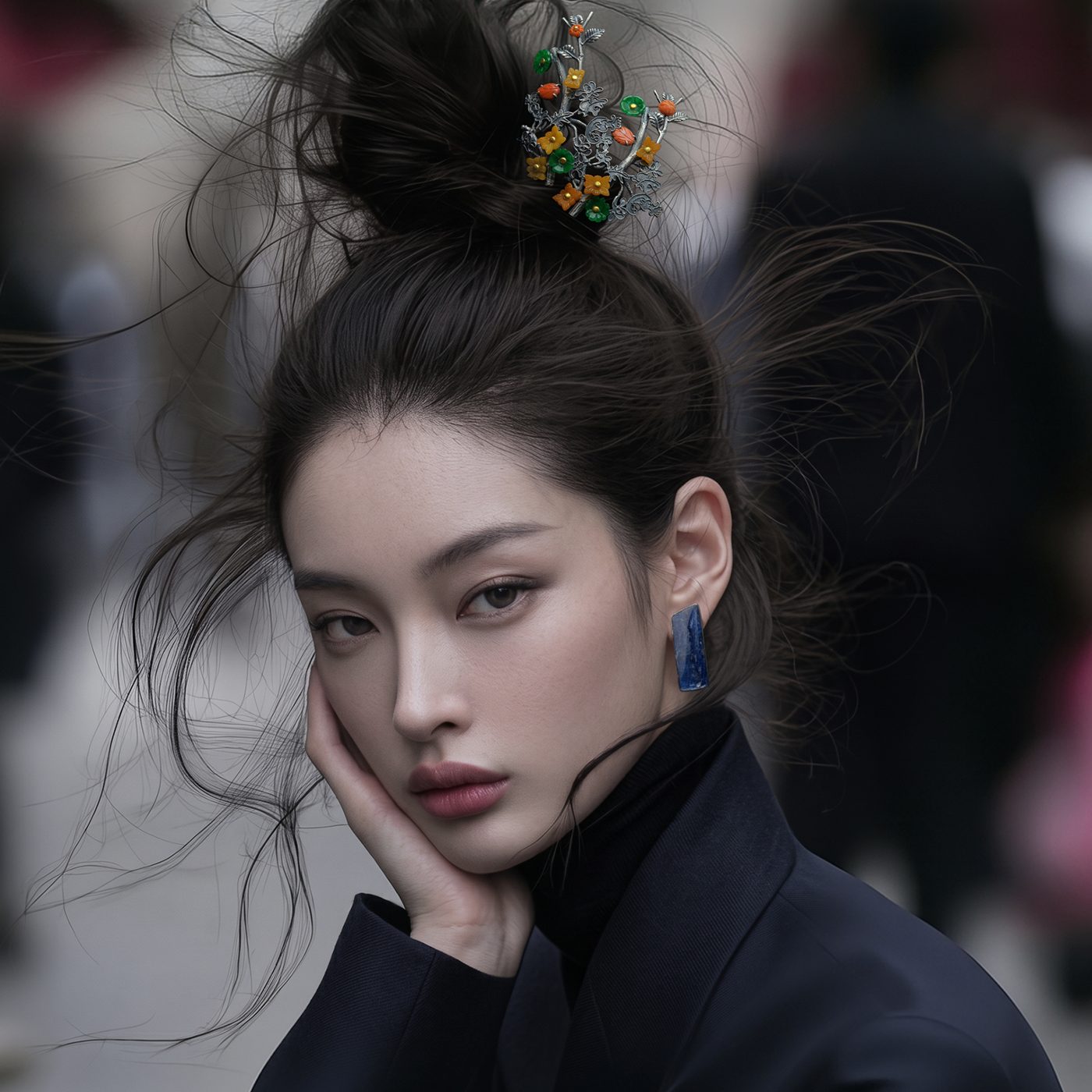
You do not need traditional hair to wear a dwikkoji. Any secure updo works.
- Low bun: the closest to the traditional look. Insert the dwikkoji above or beside the bun.
- French twist or chignon: insert it vertically into the twist for an elegant evening look.
- Half-up hair: secure the top section with a small clip, then insert the dwikkoji into the knot.
- Short hair: a small dwikkoji can be slid behind a pinned section above the ear.
- Wedding gowns: a pair of silver or gold dwikkoji in a low bun is a quiet way for a bride of Korean heritage to honour her family.
A note on etiquette
In the Joseon era, the chignon and the dwikkoji were for married women. Today there is no such rule. Anyone may wear a dwikkoji, of any age and from any culture. Koreans are generally delighted to see their heritage worn with care and understanding.
Common mistakes
- Using a dwikkoji to hold the bun. It is an ornament, not a support. Secure the hair first.
- Wearing it at the front. Traditionally it belongs at the back of the head.
- Too many at once. For everyday wear, one is enough; three is for ceremony.